AI for E-commerce: Personalization at Scale
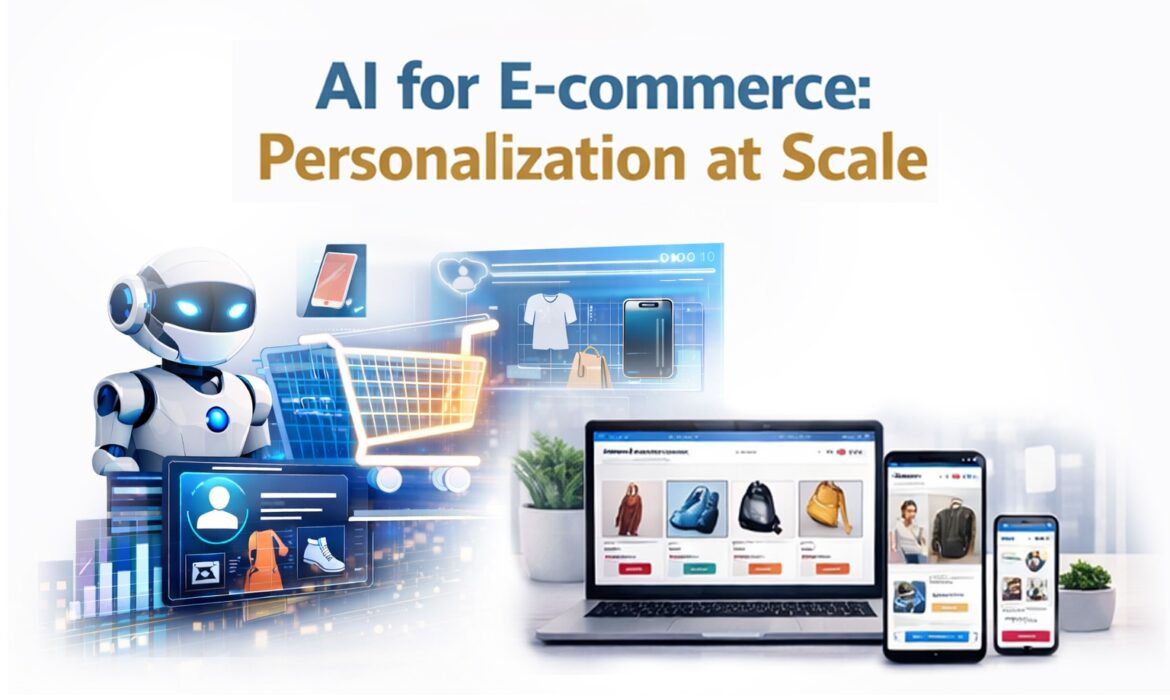
E-commerce has evolved into an experience-led ecosystem where relevance determines growth. As customer journeys become increasingly fragmented across platforms and devices, brands are under pressure to deliver consistent, personalized experiences at every interaction.
This is where AI for e-commerce personalization at scale becomes critical. By leveraging data, automation, and machine learning, businesses can deliver meaningful customer experiences efficiently—without increasing operational complexity.
Why Personalization Is a Strategic Priority in E-commerce
Modern consumers expect brands to understand their preferences, anticipate intent, and deliver value in real time. Generic messaging and static shopping experiences are no longer sufficient to drive engagement or conversions.
Personalization directly impacts key business metrics such as:
- Conversion rate optimization (CRO)
- Average order value (AOV)
- Customer lifetime value (CLTV)
- Retention and repeat purchases
- Marketing efficiency across paid and organic channels
AI enables brands to move beyond surface-level customization toward data-driven personalization at scale.
What Personalization at Scale Really Means
Personalization at scale refers to the ability to deliver individualized experiences to thousands of users simultaneously, powered by automation rather than manual effort.
This includes:
- Behavior-based product recommendations
- Dynamic content and merchandising
- Personalized offers and messaging
- Lifecycle-based communication across multiple channels
AI makes this possible by continuously analyzing customer behavior and adapting experiences in real time.
How AI Enables Personalization at Scale in E-commerce
1. Data Intelligence & Predictive Modeling
AI systems analyze large volumes of customer data—such as browsing behavior, purchase history, and engagement signals—to predict future actions. These insights allow brands to personalize proactively rather than reactively.
2. Intelligent Product Recommendations
AI-powered recommendation engines dynamically surface products based on:
- User intent and browsing patterns
- Purchase behavior of similar users
- Contextual signals such as device, location, and timing
This improves product discovery, relevance, and overall shopping experience.
3. Dynamic On-Site Personalization
AI allows e-commerce websites to adapt in real time by personalizing:
- Homepage content
- Category and product page layouts
- Promotional banners and calls-to-action
As a result, first-time visitors, returning users, and high-intent shoppers each experience the site differently.
4. AI in Performance Marketing
AI-driven personalization extends beyond owned platforms into paid marketing channels. It enables:
- Advanced audience segmentation
- Dynamic creative optimization
- Smarter bidding and budget allocation
When aligned with performance marketing strategies, AI improves efficiency while maintaining relevance at scale.
5. Automated Lifecycle & Retention Marketing
AI supports personalization across the customer lifecycle, including:
- Abandoned cart recovery
- Post-purchase recommendations
- Re-engagement and loyalty campaigns
Automation ensures consistency and relevance while reducing manual workload.
AI, SEO, and Personalization: A Strategic Intersection
AI-powered personalization also strengthens SEO-led growth by:
- Aligning content with user intent
- Improving engagement metrics such as time on site
- Enhancing internal linking and content discovery
As search engines increasingly prioritize experience and intent, personalization becomes a key driver of sustainable organic growth.
Key Challenges in AI Personalization
Despite its potential, AI-driven personalization often falls short due to:
- Fragmented or poor-quality data
- Tool-led implementation without strategy
- Lack of alignment between marketing, technology, and growth teams
Successful personalization requires a clear strategy, integrated systems, and continuous optimization.
Building a Sustainable AI Personalization Framework
For long-term success, e-commerce brands should focus on:
- Data readiness and governance
- Clearly defined personalization objectives
- Cross-channel alignment (SEO, paid media, CRO)
- Ongoing testing and refinement
AI should support a broader growth strategy—not operate in isolation.
The Future of AI for E-commerce Personalization
The next phase of AI-driven personalization will focus on:
- Predictive and intent-led shopping journeys
- Conversational and voice-enabled commerce
- Hyper-personalized search and discovery experiences
- Automated decision-making across customer touchpoints
Brands that invest early in scalable personalization will be better positioned for long-term competitiveness.
Conclusion
AI for e-commerce personalization at scale is no longer optional—it is foundational.
By combining data, automation, and strategic intent, brands can deliver relevant experiences consistently while improving efficiency and growth outcomes.
The focus should not be on adopting more tools, but on building intelligent systems that connect AI, marketing strategy, and measurable performance.