
Why a B2B Inbound Marketing Agency is Essential for Scaling Your Business Globally
A B2B inbound marketing agency helps you build trust, attract global audiences, and scale your business with localized, data-driven strategies.
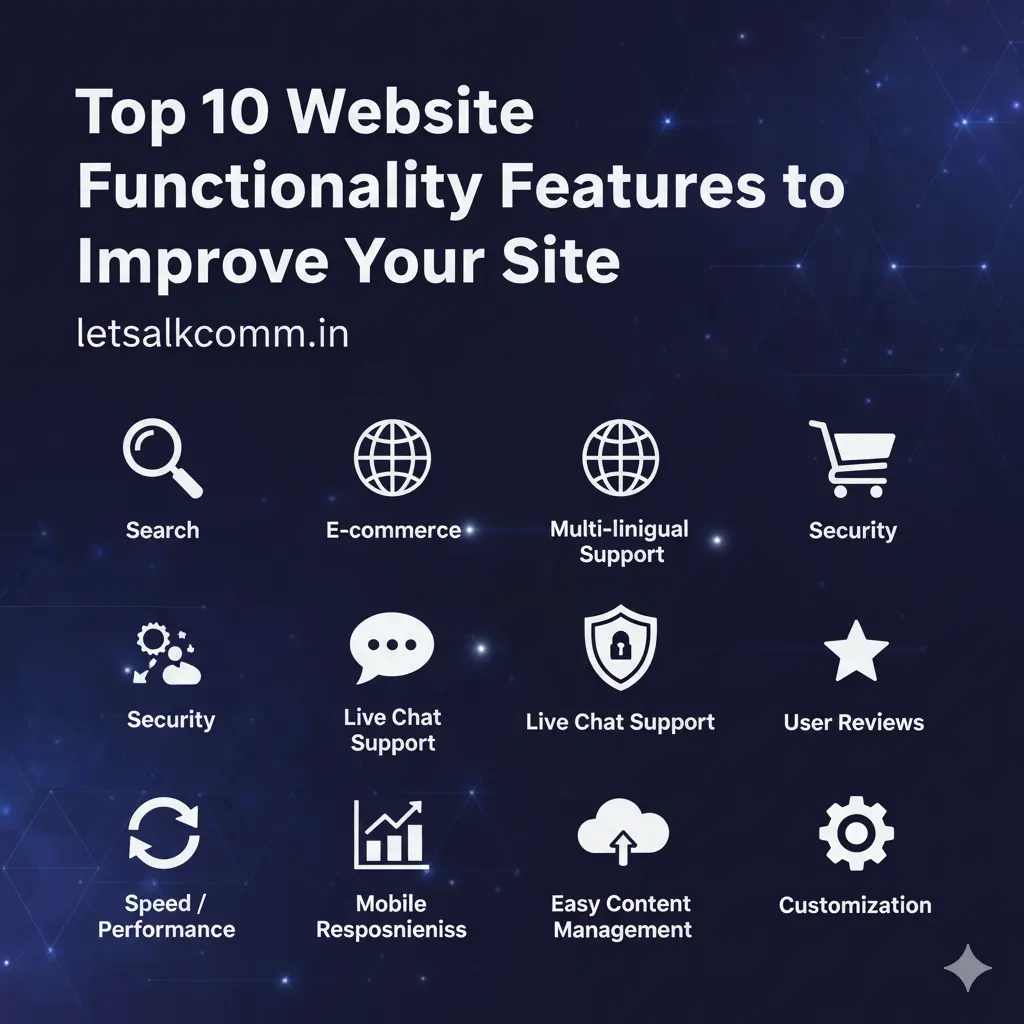
Top 10 Website Functionality Features to Improve Your Site
Discover the top website features your business needs to boost user experience, improve performance, and turn visitors into customers.

The Ultimate Holiday Readiness Guide for Online Sellers: Maximize Your Q4 Sales
A quick guide to help online sellers prepare, optimize, and boost sales during the busy holiday season.

Why a Mobile-Friendly Website is Critical for Your Business in 2025
A mobile-friendly website is essential in 2025. With most users browsing on phones, mobile optimization directly impacts your ranking, engagement, and business growth..

The Impact of AI in Graphic Design: Threat or Creative Solution?
AI is revolutionizing design. At Let’s Talk Comm, we see it as a creative partner enhancing innovation and storytelling.

How to Boost Sales on Amazon & Flipkart in 2025
Want to grow sales on Amazon & Flipkart in 2025? From SEO-friendly listings to ads, reviews & big sales events here’s your complete success guide.
How to make a Brand Identity That Stands Out
Your brand identity is more than a logo — it’s how your business is seen and remembered. Learn the key steps to build a consistent, memorable, and trustworthy brand.
How to Lower PPC Costs Without Losing Leads
Running PPC advertisements can get expensive — especially in 2025 as competition increases. Many businesses face the challenge of rising ad costs while trying to keep a steady flow of qualified leads. The good news is that with the right strategies, you can cut waste, maintain (or even improve) lead quality, and maximize your ROI.
In this guide, we’ll break down proven ways to lower your PPC costs without sacrificing lead quality.
1. Use Negative Keywords to Eliminate Waste
One of the simplest ways to save money is by avoiding irrelevant clicks. Negative keywords tell platforms like Google Ads not to show your ads for certain search terms.
For example:
- If you sell paid courses, add “free courses” as a negative keyword.
- If you provide premium software, exclude “trial” or “open source.”
This ensures your budget is spent only on people likely to convert, not on those who were never going to buy in the first place.
2. Focus on High-Intent Keywords
Not all keywords drive the same type of traffic. Broad keywords may bring clicks, but they often attract people who are still researching and not ready to buy. Instead, focus on keywords that signal strong intent, such as:
- Phrases including “buy,” “hire,” “get a quote,” or “near me”
- Specific product or service names, including model numbers or branded terms
High-intent keywords generally have higher conversion rates, meaning you spend less on irrelevant traffic and more on qualified prospects.
3. Improve Your Quality Score for Lower CPC
Google rewards ads that are highly relevant and provide a positive user experience. This is measured through the Quality Score, which directly influences how much you pay per click.
Here’s how to improve it:
- Match ad copy to target keywords — use the same language your audience searches for.
- Optimize landing pages — ensure they are fast, mobile-friendly, and aligned with the ad promise.
- Increase CTR — use compelling headlines, clear calls to action, and ad extensions to attract clicks.
A higher Quality Score can mean better ad placement and lower costs — a double win.
4. Optimize Ad Scheduling to Show Ads at the Right Time
Not every hour of the day (or day of the week) delivers the same value. By analyzing performance data, you can identify when your audience is most active and most likely to convert.
Use ad scheduling (sometimes called dayparting) to:
- Run ads only during high-performing hours
- Pause ads during low-conversion times
- Adjust bids for peak hours to stay competitive
This approach helps eliminate wasted spend and keeps your ads in front of prospects when they’re most likely to take action.
5. Test Ad Creatives Regularly to Prevent Fatigue
Audiences get tired of seeing the same ads repeatedly. When ad fatigue sets in, click-through rates drop and costs per lead rise.
To keep campaigns fresh and efficient:
- Rotate multiple versions of headlines and descriptions
- A/B test calls to action, visuals, and offers
- Pause underperforming ads and allocate budget to winners
Continuous testing ensures that you’re always running the most effective messages — helping control costs while maintaining engagement.
6. Use Geo-Targeting to Reach Only Relevant Locations
Serving ads everywhere can be a waste of money if you only sell in certain regions. Geo-targeting allows you to show ads only where your ideal customers are located.
Examples:
- A local service business can limit ads to its city or delivery area.
- A B2B company can focus only on countries where they operate.
By narrowing your geographic reach, you reduce wasted clicks and ensure your spend goes toward the most valuable traffic.
The Bottom Line
Lowering PPC costs isn’t about slashing budgets blindly — it’s about precision. With smarter targeting, better relevance, and ongoing optimization, you can reduce ad spend while keeping your leads strong and your campaigns profitable.
Top 7 SEO Trends Businesses Should Concentrate on in 2025
In 2025, SEO isn’t just about adding keywords to your website. Search is evolving at a rapid pace. People are using AI chatbots, voice assistants, visual tools, and traditional search engines in very different ways.
If you want your brand to stay visible, you need to understand user intent, new search formats, and how to make your brand discoverable across multiple platforms — including AI-driven environments.
Below, we break down the 7 biggest SEO trends shaping the year ahead and what you can do to prepare.
1. Answer Engine Optimization (AEO)
AI-powered assistants like ChatGPT, Gemini, Copilot, and Alexa are becoming the first stop for users seeking answers. Instead of visiting a website, people often get a summarized response directly in the chat window.
What this means for businesses:
- You need to structure your content so AI tools can understand and pull from it.
- A conversational tone, question-and-answer formats, and strong schema markup make it easier for AI models to find, trust, and use your content.
Action steps:
- Write in a natural, conversational tone.
- Use Q&A-style headlines (H2s and H3s).
- Add structured data (FAQ, HowTo, Product schemas) to make your content machine-readable.
2. Zero-Click Search Optimization
Google and other search platforms often answer questions directly on the results page — without sending traffic to any website. This is what we call a “zero-click” search.
While that sounds like a loss, it’s actually a huge visibility opportunity. If your content is the one being displayed, your brand gains authority, and users may still click if they need more details.
Action steps:
- Target featured snippets by answering common questions clearly and concisely.
- Provide direct answers in 50–60 words for high-volume queries.
- Use bullet points or numbered lists to increase snippet chances.
3. Voice Search Optimization
More users are asking full, natural questions through smart speakers, in-car systems, and mobile voice assistants. Voice queries often have long-tail keywords and local intent.
Action steps:
- Focus on conversational long-tail keywords (“How do I…?”, “What’s the best…?”).
- Optimize for “near me” searches with accurate local listings and location pages.
- Make sure your website loads quickly on mobile — voice users are often on-the-go.
4. Visual Search Optimization
Tools like Google Lens, Pinterest Lens, and Bing Visual Search are increasingly popular. Users can now snap a picture instead of typing a query.
Action steps:
- Use high-quality, descriptive product images.
- Add descriptive alt text and captions.
- Apply image schema markup so search engines can understand what’s in your photos.
- Ensure your site supports fast image loading with compression and next-gen formats (like WebP).
5. Topical Authority Building
Google now rewards depth over breadth. A website that covers one topic thoroughly is more likely to rank than one that covers many topics lightly.
Action steps:
- Create content clusters — a main pillar page and multiple supporting blog posts.
- Internally link between related posts to help search engines understand your topic expertise.
- Cover all subtopics users might search for under your main theme.
6. Faster Page Speed & User Experience
Speed is not optional anymore. Slow pages lead to lower rankings, fewer conversions, and higher bounce rates.
Action steps:
- Compress images without losing quality.
- Use a Content Delivery Network (CDN) to serve content faster.
- Reduce unnecessary code (minify CSS, JavaScript, and HTML).
- Test your site with tools like Google PageSpeed Insights or GTmetrix regularly.
7. EEAT: Experience, Expertise, Authoritativeness, Trustworthiness
Google continues to refine how it evaluates credibility. In 2025, demonstrating real expertise matters more than ever.
Action steps:
- Include author bios with credentials.
- Use real case studies and success stories.
- Cite credible external sources to back up claims.
- Keep your site secure (HTTPS) and user-friendly.
Final Thoughts
SEO in 2025 is about being the best answer — whether someone is searching on Google, asking a voice assistant, or using an AI chatbot.
If your brand is present, fast, credible, and easy to understand, you’ll stay ahead of competitors and win more organic opportunities — even in a search landscape where clicks are no longer guaranteed.
Content That Converts: 5 Strategies for 2025
Search engine optimization continues to change as Google and other platforms refine the way they deliver answers. One of the most powerful opportunities today is appearing in featured snippets—the highlighted boxes that display quick answers above standard search results. Securing this position, often called “position zero,” can dramatically increase visibility and credibility. In 2025, competition for these placements is fierce, and businesses need to adapt their strategies accordingly. Understanding how featured snippets SEO works and how to optimize for it can make the difference between being overlooked and being the go-to answer.
What Are Featured Snippets?
Featured snippets are special search results that appear at the very top of Google’s results page. They are designed to answer questions quickly and directly without requiring users to click through to a website. These snippets can take several forms: a paragraph of text, a list, a table, or even a video.
For example, if someone asks, “What is the capital of Japan?” the featured snippet will provide “Tokyo” in bold, often with a supporting sentence pulled from a trusted source. While these snippets may reduce website clicks, they dramatically boost brand visibility and establish authority. This makes them one of the most important elements in modern SEO strategies.
Why Featured Snippets Matter in 2025
As voice search and AI-driven search tools become more common, featured snippets play an even bigger role. Voice assistants often read featured snippet content aloud as the definitive answer. Similarly, AI-powered overviews in search results rely heavily on structured, clear answers that resemble snippets.
For businesses, appearing in these results means being recognized as a trusted authority. Even if users don’t click right away, brand exposure is invaluable. In competitive industries, mastering featured snippets SEO can give companies an edge over rivals by keeping them top-of-mind with potential customers.
Types of Featured Snippets
To rank effectively, it’s important to understand the main snippet types.
Paragraph snippets: These provide short, direct explanations or definitions, often in 40–50 words.
List snippets: These display step-by-step instructions or rankings, such as “top 10 travel destinations.”
Table snippets: These are used for data-heavy content like pricing comparisons or schedules.
Video snippets: These increasingly come from platforms like YouTube, especially for “how-to” queries.
Each type requires slightly different optimization strategies, but they all reward content that is clear, structured, and useful.
Researching the Right Keywords
Ranking for snippets begins with keyword research. Instead of only targeting broad terms, businesses should focus on question-based queries and long-tail keywords. Many snippets appear for searches starting with “what,” “how,” or “why.” For example, “how to bake sourdough bread” is far more likely to generate a snippet than simply “sourdough bread.”
In 2025, keyword tools provide deeper insights into which queries already trigger snippets. By identifying these opportunities, businesses can tailor their content to compete directly for featured positions. Building a list of target questions within your niche is the foundation of featured snippets SEO.
Structuring Content for Snippets
Search engines favor content that is easy to scan and extract. To improve your chances of winning snippets, structure your content with clear headings, subheadings, and concise answers. For instance, if targeting the query “What is renewable energy?”, include a section with that exact heading followed by a 40–50 word definition.
Lists should be formatted with numbers or bullet points, while tables should be simple and well-labeled. Even within long-form content, adding these “snippet-friendly” sections helps search engines identify the best answer to showcase. Remember, the goal is to answer quickly while providing additional depth further down the page.
Leveraging Schema Markup
Schema markup, also known as structured data, is increasingly important for helping search engines interpret content. By marking up definitions, FAQs, recipes, events, or product details, businesses can improve their chances of being selected for snippets.
In 2025, schema is especially critical as AI-driven search tools rely on structured data to pull accurate answers. Implementing schema signals that your content is reliable and makes it easier for search engines to feature your site in snippets.
Optimizing for Voice and AI Search
Because voice assistants often pull answers from snippets, optimizing for conversational queries is vital. Content should reflect natural speech patterns rather than just keywords. For example, instead of writing “best hotels New York,” you might phrase it as “What are the best hotels in New York?”
AI-powered search features also prioritize clear, well-structured responses. Aligning content with natural language and anticipating follow-up questions improves the likelihood of being featured. By thinking like your audience and providing direct, conversational answers, you strengthen your featured snippets SEO strategy.
Building Authority and Trust
Not every site is eligible for snippets. Google tends to favor content from authoritative, trustworthy sources. This means building credibility through backlinks, positive user engagement, and consistent publishing. High-quality, accurate content is rewarded over thin or overly promotional material.
In 2025, trust signals such as author expertise, up-to-date information, and transparent sourcing matter more than ever. Regularly updating articles, especially those targeting snippet queries, ensures accuracy and increases the chances of maintaining or winning featured positions.
Monitoring and Refining Snippet Performance
Winning a snippet is only half the battle; maintaining it requires ongoing monitoring. Competitors are constantly optimizing their own content, and Google updates its algorithm frequently. Using SEO tools to track which queries trigger snippets and whether your site holds the position is essential.
If you lose a snippet, analyze what changed—did a competitor provide a more concise answer, or did Google shift the format type? By refining your content regularly, you can increase the chances of regaining or maintaining top visibility.
Conclusion
In 2025, featured snippets are central to how users discover information online. They power voice assistants, enhance AI-driven search experiences, and establish trust by placing answers directly in front of users. For businesses, mastering featured snippets SEO is one of the most effective ways to boost visibility and authority.
The path to success lies in researching question-based queries, structuring content clearly, implementing schema markup, and providing concise, conversational answers. By focusing on user intent and continuously refining content, businesses can position themselves as the go-to source for quick, reliable information.
Ranking for featured snippets may not always drive immediate clicks, but it builds long-term brand awareness and credibility—key factors in any sustainable digital strategy. In the end, the websites that adapt to these evolving search dynamics will continue to thrive in an increasingly competitive online world.